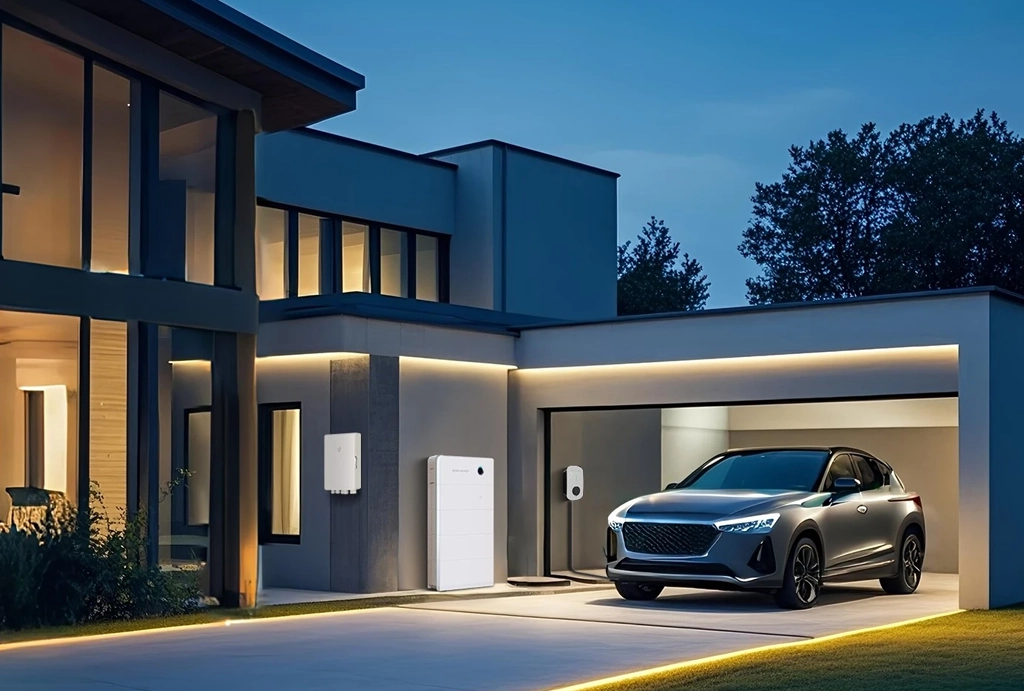
Battery sizing guide
How to Size a Solar Battery for Your Ballarat Home
Too small and your battery is flat by 9pm. Too big and it never fills, so you’ve paid for storage you can’t use. Work out the right battery size for your home in Ballarat and surrounding areas with this guide and our free calculator.
Updated October 2026 to include the current federal battery rebate rates.

The quick answer
To size a solar battery, add up the electricity you use after dark and divide it by 0.9. The result is the usable battery capacity in kilowatt-hours (kWh) you need.
After-dark use (kWh) ÷ 0.9 = battery size in usable kWh
Example: a home using 20 kWh a day uses about 12 kWh between 6pm and 7am. 12 ÷ 0.9 = 13.3, so a 13.5 kWh battery is the right fit.
Why 0.9? Batteries lose about 10% of the energy going in and coming out, so you need a little more capacity than the power you use.
Most Ballarat homes end up with a 10 to 16 kWh battery paired with a 6.6 to 10 kW solar system. The steps below show how to find your own number, and the calculator does the maths for you.
How to size your battery in 5 steps
Step 1. Work out how much power you use after dark
A battery’s job is to run your home when the panels aren’t producing. So the number that matters is the power you use in the evening, overnight and early morning, not your total daily use.
The easiest way to find it is to download your half-hourly usage data from your retailer’s app or the Powercor online portal, then add up everything from about 6pm to 7am. If you only have a bill, use these rough shares:
Out during the day
about 60%
of daily use is after dark
Mix of home and away
about 50%
of daily use is after dark
Home most days
about 45%
of daily use is after dark
Step 2. Decide what you want the battery to do
Your goal changes the size. Pick the one that sounds most like you:
Lower my power bills
Size the battery to cover your after-dark use. This gives the best return for most homes.
Typical: 10–14 kWh
Keep the lights on in a blackout
Add about 20% as a reserve the battery always holds back. You’ll also need a backup-ready inverter or gateway.
Typical: 13–20 kWh
Use as little grid power as possible
You need a bigger battery and more panels to fill it. Even then, most Ballarat homes still draw some grid power in July.
Typical: 20 kWh or more
If you’re planning an electric vehicle or switching from gas heating, allow for that now. Both add mostly evening and overnight load.
Step 3. Check your solar can fill it
A battery only charges from the solar left over after your home has used what it needs during the day. A big battery on a small system will sit half empty most of the year.
A good rule for Ballarat: your solar system size in kW × 2 ≈ the largest battery it can fill on a typical spring or autumn day.
5 kW solar fills about 10 kWh
6.6 kW solar fills about 13 kWh
10 kW solar fills about 20 kWh
13.2 kW solar fills about 26 kWh
In mid-winter the same systems produce about a third as much, so a battery that fills in October may only reach 30–50% in July. That’s normal here. Many owners use a time-of-use plan to top up from cheap off-peak power on short winter days. If your solar is undersized, our solar sizing guide shows how to work out the right system.
Step 4. Compare usable capacity and power output
Battery spec sheets list two numbers that matter, and they’re easy to confuse:
Usable capacity (kWh)
How much energy the battery can store and give back. Always compare usable capacity, not total or “nominal” capacity, which can be 5–10% higher.
Think of it as the size of the fuel tank.
Power output (kW)
How much the battery can supply at once. 5 kW runs a typical evening. Heat pumps, ovens and induction cooktops running together can need 7–10 kW.
Think of it as the width of the fuel line.
Many batteries are modular, so you can add capacity later. That only works within the same product range, usually while matching modules are still sold.
Step 5. Factor in the federal battery rebate
The federal Cheaper Home Batteries Program gives an upfront discount on eligible batteries, applied by your installer. Since 1 May 2026 the discount per kWh depends on how big the battery is:
The rate also steps down every six months, with the next reduction due on 1 January 2027. Victoria doesn’t currently offer its own battery rebate, as Solar Victoria’s battery loan closed in 2025, so the federal program is the main discount for Ballarat homes.
What this means for sizing: batteries up to about 14 kWh get the most discount per kWh. Going bigger can still make sense for EV owners and all-electric homes, but only if your solar can fill the extra capacity.
Solar battery size calculator
Battery size calculator for Ballarat homes
Answer five quick questions. You'll see the battery size that suits you, how full your solar can get it in each season, and what a typical day looks like with it.
This sets how much of your power is used after the sun goes down.
4. What matters most to you?Summer day100%
Spring / autumn day100%
Winter day50%
Where your battery sits in the federal rebate
A typical day with this battery
Swipe the chart to see the full day.
This is a guide only. It assumes a north-facing roof with little shade, Ballarat's average seasonal sunshine, typical household usage patterns and about 90% battery round-trip efficiency. Rebate bands are from the federal Cheaper Home Batteries Program and the discount per kWh steps down every six months. Your installer should confirm the final design after a site inspection.
Battery size guide for Ballarat households
Find the household most like yours. Each card shows a typical battery and the solar system that can keep it charged.
Couple or single
8–12 kWh a day, about 6 kWh after dark
5–7 kWh
battery with 5–6.6 kW solar
Small family
15 kWh a day, about 9 kWh after dark
10 kWh
battery with 6.6 kW solar
Family of 3–4 (most common)
20 kWh a day, about 12 kWh after dark
13.5 kWh
battery with 6.6–8 kW solar
Large family or electric heating
30 kWh a day, about 17 kWh after dark
16–20 kWh
battery with 10 kW solar
All-electric home with an EV
40 kWh a day, about 24 kWh after dark
24–28 kWh
battery with 13 kW+ solar, often three-phase
Estimates assume a north-facing roof with little shade. Charge an EV from solar during the day where you can, as it’s cheaper than running it from the battery.
Where should your battery go?
Where the battery is installed affects how well it performs and how long it lasts. Australian Standard AS/NZS 5139 sets the rules, and your installer has to follow them. Most Ballarat homes put the battery in one of two places:
In the garage. This is the most popular spot here. It keeps the battery out of the weather and away from Ballarat’s frosty winter nights. Many lithium batteries charge more slowly when they’re very cold, so a sheltered garage helps them work at their best in July.
On a shaded outside wall. South- or east-facing walls work well. Avoid walls that cop the afternoon sun, as heat shortens battery life.
Batteries can’t go in bedrooms or living areas, in the roof space, under stairs or along an escape path. They also need clearance from windows, doors and hot water units. We check all of this during your free site inspection and show you the options before you commit.

Solar battery sizing FAQs
What size battery do I need for my Ballarat home?
Add up the power you use after dark, from about 6pm to 7am, and divide it by 0.9 to allow for charging losses. A home using 20 kWh a day with about 12 kWh after dark needs roughly a 13.5 kWh battery. Most Ballarat homes suit a battery between 10 and 16 kWh.
Is a 13.5 kWh battery enough?
A 13.5 kWh battery covers the evening and overnight use of most Ballarat homes using 15 to 25 kWh a day. It also sits within the first 14 kWh of the federal battery rebate, which gets the full discount rate. Larger households, EV owners and all-electric homes may need more.
Can my 6.6 kW solar system charge a battery?
Yes. A 6.6 kW system in Ballarat can usually fill a battery of about 13 kWh on a typical spring or autumn day after covering your daytime use. In mid-winter it will only part-fill it, so many owners top up from off-peak grid power or add panels.
Will a battery keep my power on during a blackout?
Only if it is installed with backup capability. This needs a backup-ready inverter or gateway, and the installer chooses which circuits stay on. Without it, most batteries switch off with the grid for safety.
How does the federal battery rebate affect battery size?
Since 1 May 2026 the Cheaper Home Batteries Program pays the full rate on the first 14 kWh of usable capacity, 60% of the rate from 14 to 28 kWh and 15% from 28 to 50 kWh. The rate also steps down every six months. This makes batteries up to about 14 kWh the best value per kWh.
Can I add more battery capacity later?
Many modular batteries let you add extra modules later, but only within the same product range and usually within a few years while matching modules are still sold. If you are planning an EV or going all-electric, choose a modular battery or size up at the start.
Get your battery sized by a local expert
Send us a recent power bill, or your half-hourly data from Powercor. We’ll model your real evening use, check your solar and Powercor connection, and recommend the right battery with a free, no-obligation quote that includes the federal rebate.